
Why Recognizing Red Flags Before Signing Is Critical
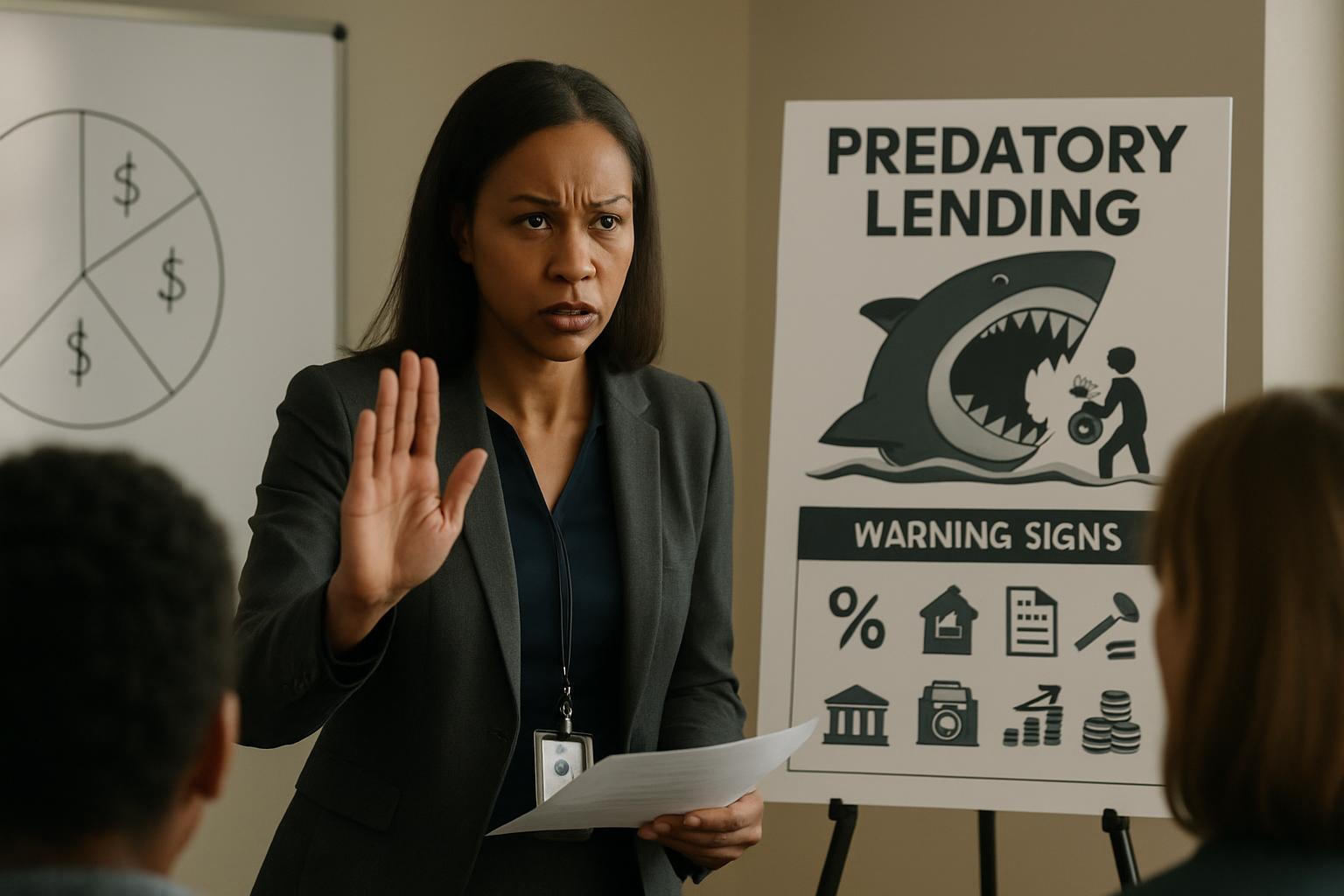
Once you have signed a mortgage — even a toxic one — your options become significantly more limited and expensive. The time to identify toxic lending is before the closing table, not after. Coventry Enterprises Group has made borrower protection education a cornerstone of our mission. These red flags represent the most reliable early warning signs of predatory and toxic lending.
Red Flag #1: Your Rate Is Significantly Above Market
Before approaching any lender, research the current average rates for your credit score and loan type on sites like Freddie Mac's Primary Mortgage Market Survey, Bankrate, or the CFPB's rate checker tool. If a lender is quoting you a rate 1%+ above these benchmarks without clear justification (unusual property type, very low credit score), you are likely being overcharged.
Red Flag #2: Pressure to Sign Quickly
Legitimate lenders provide time to review documents. Federal law (the TRID rule) requires lenders to provide you with a Loan Estimate within 3 business days of application and a Closing Disclosure at least 3 business days before closing. Any lender who pressures you to waive these periods, close before you have adequately reviewed documents, or makes claims that the deal will disappear if you take time to think — walk away.
Red Flag #3: Unexplained Fee Increases at Closing
The Closing Disclosure must match the Loan Estimate for most fees within specific tolerances. The TRID rule sets zero tolerance for lender-controlled fees (they cannot increase at all) and 10% tolerance for third-party fees. If your closing costs have increased significantly without explanation from your Loan Estimate, you have the right to delay closing and demand explanation. Fees that increase dramatically and without justification are a serious red flag.
Red Flag #4: A Loan Structure You Do Not Fully Understand
If your loan officer cannot explain, in plain language, how your loan works — including what the rate will be after any adjustment period, what the maximum payment could be, and what any balloon payment looks like — do not sign. Understanding your loan is not optional. It is your right. A lender who makes the loan structure difficult to understand may be benefiting from that confusion.
Red Flag #5: Encouragement to Borrow More Than You Requested
Predatory lenders often push borrowers to take larger loans than needed. This generates more fee income for the lender and increases the borrower's debt burden. If a lender is consistently steering you toward a higher loan amount than you requested or need, treat this as a significant warning sign.
Red Flag #6: Prepayment Penalties Not Clearly Disclosed
Prepayment penalties trap borrowers in loans that would otherwise be refinanced away. They are prohibited in most Qualified Mortgages but can appear in some Non-QM products. If your loan has a prepayment penalty, it must be disclosed in the Loan Estimate. If you discover a prepayment penalty you were not told about, this may constitute a federal disclosure violation.
For comprehensive consumer protection information, see our dedicated pages on bad loans and toxic lending, and visit our affiliated resource at coventryenterpriseslltoxiclending.com.